My Photo
Hadhrat Abdullah bin Umar radiyalaahu anhu had mentioned, "Whoever wishes to follow the way of another, should follow the ways of those who have passed away. These were the companions of Muhammad sallalaahu alayhi wassalam, who were the best people of this Ummah. Their hearts were most pious, their knowledge was deepest and they were least pretentious. They were people whom Allah Ta'ala had chosen to be companions of His Nabi sallalaahu alayhi wassalam and for the transmission of His Deen. You people should emulate their character and mannerisms. By the Rabb of the Kaabah! The Sahabah radiyalaahu anhum of Rasulullah sallalaahu alayhi wassalam were correctly guided."

Monday, 19 March 2012

Early Recollection of Dakwah and Tabligh Effort


I have 7 brothers and 2 sisters and I am the youngest. Alhamdulillah, our family is not alien to the effort of dakwah and tabligh ever since my second sister got married to a man whose brothers were amongst the early men who had embraced the effort of dakwah and tabligh many years ago. I recall my sister used to read ahadith from Fadha'il Amal after Maghrib or Isya' when I was very young whenever she returned to visit us and our parents for a few days. Sometimes she would asked me to read from the kitaab which I gladly did but I was too young to understand them. But the scene of us sitting together, hearing the ahadith sticks in my mind to this day. Never mind about understanding any of the ahadith, it is the mahul or the environment of ta'leem that is important. In fact, I believe even now many Muslim adults have difficulties in understanding ahadith and aayah (verses) from the Holy Quran. Blessed are the souls who are given deep understanding by Allah of kalamullah and kalam of Rasul sallalaahu alayhi wassalam, and none understood them better than the Sahabah radiyalaahu anhum. When Allah wishes well for someone, He guides him towards the understanding of Deen. Even a verse of ahadith is being read and listened to by a Muslim household members in a Muslim home is a giant step towards emulating the households of the Sahabah radiyalaahu anhum during the time of Rasulullah sallalaahu alayhi wassalam.

My father (may Allah fill his grave with noor) had been a chairman of the Jame' Masjid in our community for a long period throughout his lifetime. When I was very young, I vividly recall heavily bearded men of Pakistani or Indian origin with a local man came to viist him on several occasions. Subsequently, I used to play with a miswaak that somehow my father had kept one in his car, knowing not what the use of the twig like miswaak for. Only now I realised that the solah offered after doing miswaak in wudhu'  is seventy times better than the solah offered without miswaak. I also found out after the demise of my father that one of the kitaabs that he frequently read every morning sitting on his rocking chair was the Fadha'il Solah booklet by Hazrat Maulana Muhammad Zakariya Kandhlawi rahmatullah alayhi, a part of Fadha'il Aamal kitaab

When I was about fourteen or fifteen years old, I remember on several occasions, my childhood friend who is the son of Arwah Haji Wan Mahmood had approached me with a group of people, amongst them his elder brothers and one of them talked to me about something that I could not comprehend. I only recalled they asked me to go to our local masjid. It turned out that they were already doing umumi ghusht long before I knew about the effort of dakwah and tabligh.

When I was at a primary school levels at a military college, I recalled sitting with other students listening to ahadith being read out after Maghrib solah. It turned out also to be a fadha'il ta'leem from Fadha'il Aamal that had been started by my past seniors since the mid 70's. 

When I was studying at pre-university levels, I recalled spending a night with a few friends at Masjid India in Kuala Lumpur, which turned out to be a sabguzari night at the former markaz or centre of dakwah and tabligh in Malaysia.

When I was an undergraduate in England, I arrived there with the wrong intention of anticipating freedom. Even before I arrived in the UK, I plotted nasty thoughts and actions away from what I foolishly thought of regimented life at home lands. Just before I was about to be drown in wretched sinful life, someone came knocking at the door at my house at George Street. I was in speechless shock when I opened the door and there standing at the front door of my house the smiling faces of heavily bearded men in white robes and white amamah, a couple of them looked very much like Indians or Pakistanis, one looked like he was from West Indies and the other, white British man with dark brown beard. As if I could still see their glowing faces. I stood there motionless. I could not remember even a word of their short speech. The only thing that crossed my mind at that very moment was how could there possibly exist such men in England? I was completely awestruck. Though I did not fulfill their supposedly invitation to the nearby masjid, that moment really had saved my fragile imaan and served as a wake-up call on me as a Muslim. I hope I would have an opportunity to relate about this episode of my life in more detail and my subsequent dakwah and tabligh journey back to England after the lapse of 12 years.

The most astonishing thing is that I could not recall any of the above mentioned foreshadowing glimpse of guidance until I finally went out for the first time in khuruuj in the path of Allah for 3 days. Only after the blessed khuruuj, those auspicious memories started to come to me like river flow. It is rather frightening when I see them as several signs and signals of guidance by Allah, yet I had failed to grasp them earlier on. I dread imagining those moments of events are only be put to recall and recollection on the Day of Judgement where there is absolutely no hope for return. All praise is due only to Allah. We seek salvation in Him from the evils of our inner selves and the vices of our actions. There is none to guide one whom Allah intends to misguide and there is none to misguide one whom Allah intends to guide.


Note: Other early recollection had reached me in the form of tell-tales.


Wednesday, 7 March 2012

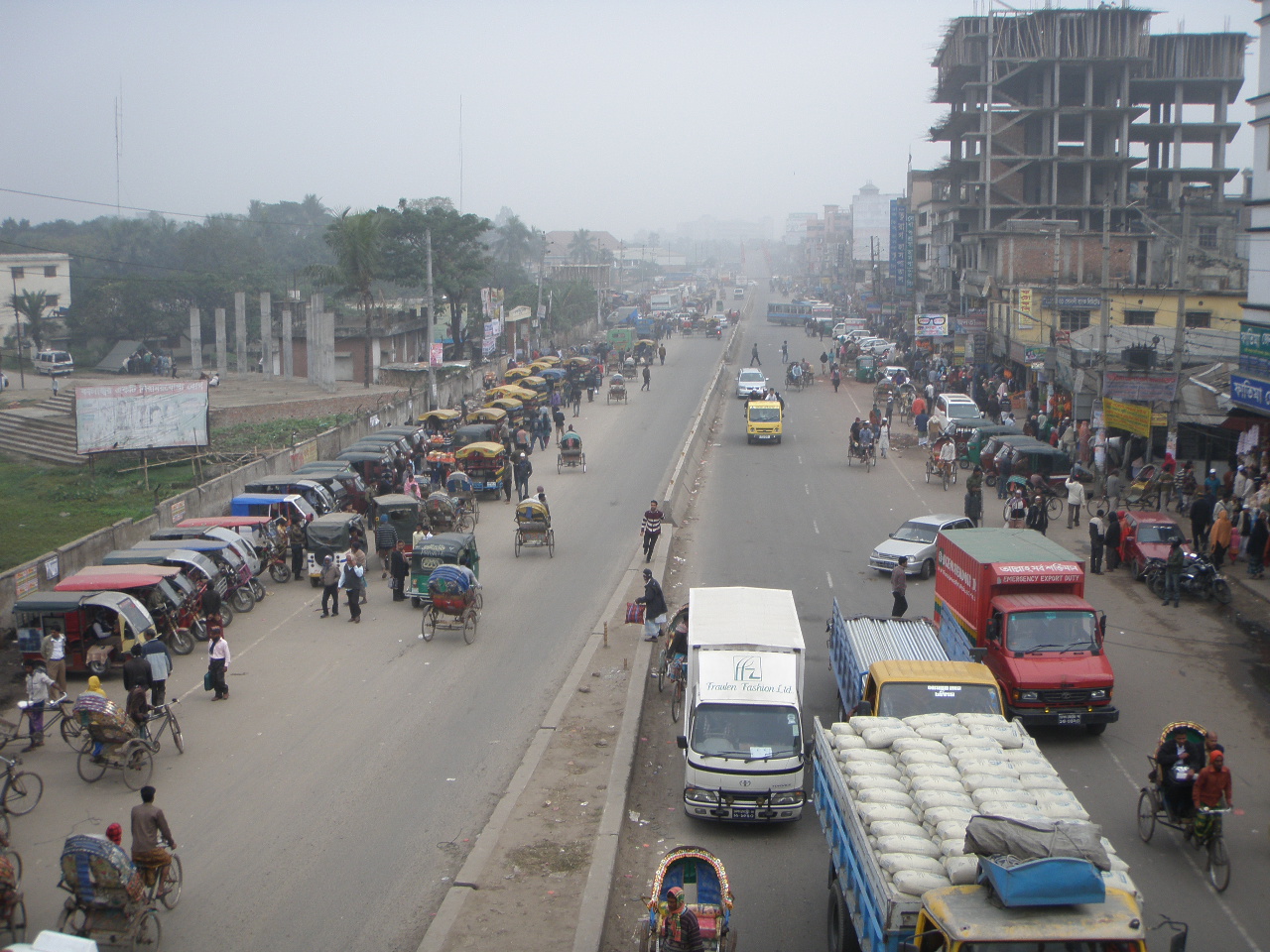
A Report On Tablighi Jamaat Ijtema in Bangladesh 1399H (1979)


THIS IS A TRANSLATED REPORT ON TABLIGHI IJTEMA IN BANGLADESH IN THE YEAR 1399H (1979) BY SYEIKH MUHAMMAD AMAN AL-JAMY AND SYEIKH ABDUL KARIM MUROD - EXCERPT FROM THE MALAY TRANSLATED BOOKLET ENTITLED "MENYINGKAP TABIR KESALAHFAHAMAN TERHADAP JEMAAH TABLIGH" (LIFTING UP THE VEIL OF MISCONCEPTION AGAINST TABLIGHI JAMAAT)

Bismillahirohmaanirrohim

Tablighi Jamaat had extended an invitation to the University Islam Madinah to attend a large gathering and meeting of Muslims in Dakka, the capital city of Bangladesh. The University had accepted the invitation and thus the two of us, Muhammad Aman Al-Jamy from Ahadith Faculty and Abdul Karim Murod of Syariah Faculty, were sent to participate in the gathering.

We left Al-Munawarrah Airport on Monday morning 10.2.1399H to Jeddah on our journey to Karachi (Pakistan). We arrived in Jeddah at 6.30am and we immediately contacted a representative of Pakistan Airlines through the Office Manager of University Islam in Jeddah, Al-Ustadz Musfir Az-Zahrani, since he had booked our seats for the flight. The travelling procedures finished within 10 minutes and we waited at the departure hall for the journey. But an hour later, we were surprised with an announcement made that our departure was being delayed to an unspecified time, apparently caused by the flight engine trouble. We then went through an uncertain waiting period. We performed Dhuhur solah at the departure hall since we were not allowed to leave the hall. During lunch, we were told that the flight would be long delayed.

And so our wait continued until after Isya' solah on Tuesday night. Then it was announced that our departure time would be at 11.00pm. It was already past midnight when we finally continue our journey to Karachi. We slept soundly all the way during the flight as we were tired during the long wait in Jeddah. We were only woken up by the in-flight landing announcement. Alhamdulillah, we arrived safely and entered Karachi city before dawn. We made Fajr solah at the hotel. 

After Fajsolah and a good rest, we discussed about our journey to Lahore (Pakistan) that we initially intended to go before going to Dakka. But we decided to postpone the Lahore journey until we return from Dakka, fearing that we would be late to attend the Ijtema' which was our main purpose for the journey. So on Wednesday 12.2.1399H we tried to book a flight to Dakka on Thursday, but we were informed that flight to Dakka was only available on Friday for those who did not take the flight on Tuesday, on the day that we just arrived in Karachi. Flights to Dakka were only available twice a week - on Tuesdays via Pakistan Airlines, and on Fridays via Bangladesh Airlines.

Hence, we booked seats on the Friday flight, and by the acceptance of Allah, we took off after Asr solah, thereby reached Dakka Airport late at night. It was a 3 1/2 hours flight from Karachi Airport to Dakka Airport. The two of us and all those who made the journey with us for the Ijtema, were welcomed at the airport by the istiqbal people who have good relationship with the airport officials, and these people were tasked to welcome all the delegations arriving for the Ijtema. With them, there were a few Sudanese and Pakistanis whom we had met before. 

They handled all the airport procedures for the benefit of all the delegations that arrived for the Ijtema' in a special way where the delegations did not have to undergo passport and travelling inspections. The delegations' passports were not even opened, just simply marked with coloured chalk, whereas other travelers have to go through rigorous inspections. We then be ushered to a masjid near the airport and divided into a few groups of guests. From there we were brought to the lodgings made up of tents readily set up at the Ijtema site! Everything settled before dawn and we have time to rest for awhile before the call of the adzan. The adzan then was called and we performed solah at the nearby masjid.

The masjid (at the Ijtema' site) looked like a large structure erected on land area measuring approximately 1.5km x 1km capable of accommodating thousands of people. A very large number of people approximately 1 million performed solah in congregation behind one imam without the use of loud speakers. A number of muballighin were divided and located on strategic high places to shout the voice of the imam until every musholi could hear the imam's voice during solah in jamaah.  I myself did not know why they never used loud speakers during solah whereas they did use loud speakers in talks, discourses, ta'leem, etc.

Everyone was amazed with the detailed arrangements and preparation for the Ijtema since the masjid and the guests' tents were all made of light building materials, made use of, and then returned to their owners at their stores in the condition that they remained eligible to be sold and used again.

The masjid and tents were made of light materials such as zinc, bamboos, gunny and ropes without the use of nails to prevent tem from being damaged. The owners and merchants of the light materials donated them, put up and built the tents themselves.

When the Ijtema was over, they themselves untied the ropes and brought down the tents with ease, as easy as putting them up beforehand. In this unique masjid, in the most calm Islamic environment that spread humility and peace, the mushollis sat in groups across the masjid in halqah and discourses everytime after solah. This masjid resembled the Muslims ummah masjids in the beginning of Islam era, when masjids only had been established for solah and ibadaah, not just for the display or pride and luxuries. May Allah always assists us.

The all  the jamaahs that were apportioned across the masjid make tadarrus of the Al-Quran  by memory, reciting some short surah that in general, have been memorized by all Muslims or the majority of them. This lasted until sunrise and breakfast time. Thereafter, preparation for following lectures or discourses. At the time of Dhuha, on Saturday 15.2.1399H, we attended a discourse by the respected Syeikh Muhammad Umar in Arabic. The lecture was delivered specially for the Arabs, and it was a lecture of very high quality and of great benefits. Therein, there were answers to many doubts (syubhat) about the activities of Tablighi Jamaat, the call for khuruuj fi sabilillah and the purpose of the said khuruuj that could be summarized as changing the mahul or environment for the dai'e and the mad'u (those who are being dakwah). Since not all those who go for khuruuj are dai'e. But most of them are people who intended to get islah or rectification, in need of encouragement to practice and love for Islam, and solutions to their religious concerns. Experience shows that all these could not be achieved by a person except when he goes out, leaving the hustle bustle of lives and moves to a better environment, etc.

After his lecture ended, Arabs jamaah were told to attend a discourse after Dzuhur solah  and one of us was requested to deliver the lecture. Certainly we fulfilled the request.

I delivered the lecture after Dzuhur solah, and it was translated into various languages. Then announcement was made about a discourse by Syeikh Abdul Karim Murod on Sunday 16.2.1399 after Dzuhur solah as well. Likewise, we regularly follow discourses after every solah that was translated from Urdu to Arabic.

Sheikh Abdul Karim Murod delivered a lecture at the scheduled time, and the talk centred on Tauhid Ibadaah, a reminder not to worship any wali (righteous man), and not to erect any structure on their graves. As for the Saturday talk, it was a general direction towards achieving kalimah At-Tauhid.

The Ijtema site is approximately 7km from the city centre. This helps them to establish and tranquility in solah jamaah, even regularize themselves towards masjid throughout the duration of the Ijtema.

We and those like us, who arrived a bit later could not enter the capital city centre before and after the Ijtema. After the Ijtema was over on Tuesday, we immediately left the Ijtema site for our visit to several parties in Pakistan.

Other people immediately proceeded in the effort of dakwah ilallah, and they had been tasykil (urged to participate) in a large numbers of jamaat every time after every solah. Tuesday was the day where directions and guidance was given to the dai'e before they were sent in jamaats. On that day, the mixed feeling of joy and shedding of tears witnessed the depth of mutual love for the sake of Allah in their hearts. Also witnessed their state of fana' or ecstasy in loving Allah, their hard work in the effort of dakwah ilallah and their relaince on the One and Only Allah without turning on to other than Him.

This serves to summarize their discourses, lectures, talks, actions and abstinence that is contrary to what is being said about them by those people who do not really know them, or just pretending not to know the truth about them because of some reasons.

One thing about them that should be accorded special recognition, is that this jamaat feel the sweetness that could not be felt by other jamaats that are carrying out dakwah ilallah, ie. their patience and tolerance in dealing with those people whom are undergoing rectification with them and those people who are given guidance, together with husnu dzoon  or good impression towards them. Their patience is like the patience of a mother towards her beloved child.

At their hands, Allah gives hidayah to so many of  His servants of all races, especially the young men that we had sent to study in Europe and America, then we forgot about them and we let them managing themselves without care and guidance. Allah has saved many of them through the effort of this jamaat, and had given them hidayah when they were at the brink of leaving the fold of Islam, when they were being influenced by the living environment where they study. I have real evidence and stories of such cases that would be very long to tell all. 

A Short Story

For instance, I will mention a story about a young man from Riyadh who was present at the Dakka Ijtema together with a group of young men from America. He was saved by Allah from 'jahiliyyah' that takes root in America because of this jamaat. This young man told me about his desire to perform umrah, with the hope that the act of worship will eliminate his sins and purify him from jahiliyyah.

Of course I gave encouragement for it, after I explained to him the priority of taubah (repentance) that it is able to remove previous sins. With an apparently visible embarrassment on his face he said, "Syeikh Muhammad, I desire to perform umrah but I do not know what to do if I reached Makkah, since I had forgotten all that I had learnt at school before, even before I went to America. I've lost everything." He said this with great remorse, and I was very heartened to hear his confession. I said to him, "Let us rather move away from the bustle of people for me to describe the practices of umrah." He said, "May I record them?" I said, "Please do if you have tape recorders and cassette." I was also asked to describe the practices of hajj. I described them all in brief and encouraged him to visit Masjid Nabawi and the Islamic University in Madinah Al-Munawarrah for books and beneficial pamphlets. 

One thing that I want to briefly mentioned about this story and the description of events mentioned before, that the Jamaat Tabligh had a long lists of desirable results from their effort that are too lengthy to mention, which are not present in other jamaats, in Islamic world and others. Their effort could clearly be perceived by, and could not be denied by friends or foes.

The secret of their success is because this jamaat makes dakwah ilallah and the rectification of the entire humanity as their purpose of life. It is not enough for this jamaat to hold dakwah effort with their left hand and live by its name, but they hold dakwah effort with both hands. Then they stay away from desire for praises and commendation. To them, praises or condemnation is the same, till they attain simplicity of lives. 

Suffice for me these as illustrious, since the difficulty is clear, and the effect of their dakwah effort is also very clear. And those who make aamal, the effect of their aamal and struggle is evidently theirs. May Allah Ta'ala grants taufiq and strength unto us.

In the atmosphere that we described, we lived the life of the earliest da'ie that still is being preserved in their fitrah, for the duration of 3 days.

On the fourth day, Tuesday 18.2.1399H, after solah dzuhur, we left for Karachi. There we reserved flight seats for Sunday 23.2.1399H flight to Jeddah, and one of us to take a flight to Lahore before Sunday, intending to get back to Karachi so that we could return together to Jeddah. Alas, the flight to Lahore could only be obtained on Wednesday 19.2.1399H and because of an unforeseeable event, return flight to Karachi could not be obtained except on Monday 24.2.1399H. Because of that one of us returned to Jeddah on Sunday 23.2.1399H and the other on Wednesday 26.2.1399H, thereby completing our blessed journey, Insha' Allah.

Notes

It is observed that the fact is Tabligh Jamaat has no official name. Tabligh Jamaat is the name being called by people, that pointed out to dakwah and their activities, i.e. dakwah and tadzkir (giving reminders). Whereas dakwah training, coordination, and repeated gatherings, all of which make them capable of carrying out through coordination in their affairs without feeling weariness or dejection.

Tablighi Jamaat is capable of holding and organizing the largest of gathering, when if it is held by others, would require huge sum of expenses and require a long duration of time. As for Tablighi Jamaat, in their ijtema or gatherings, require not much expenses except to treat the guests and delegations that come from distant places. In fact, every individuals in the jamaat consider themselves to be responsible for the success of the ijtema or gatherings. Everyone perform their duties. Everyone presented themselves according to their abilities and straightaway deal with the work. Everyone seek to serve and not to be served, and strive to give benefits to others, making the love and care for each other at a very high level.

Suggestions

Having described about this jamaat and the Islamic activities that they performed, expressed by the great real results that could be relished, and some of them had been spoken of, where friends and foes provide a similar assessment against them. After all those, we view it as sound to make the following suggestions:
1. To actively help each other with this jamaat in all honesty, work together with them, in order to attain efforts like sharing experiences.
2. For the effort of this jamaat exists among our university students so that they may give or receive useful lessons. Verily our university students include those who are really in need of an effort such as this and the dakwah which is full of bless.
3.  The Islamic University should participate more in the ijtema and gatherings of this jamaat through their board of teachers and students.

We pray to Allah to make our aamal sincere only for Him, to rid us from riya' and seeking fame. Verily to Him we place all our needs.

May salutation and peace be continuously showered upon the best of Rasul sallalaahu alayhi wassalam, his family and his Companions radiyalaahu anhum.

Muhammad Aman bin Aly Al-Jamy
Dean of Ahadith Faculty and Islamic Studies.

Thursday, 1 March 2012

We Do Not Create New Way Or New Jamaat


The ulama' spearheading the effort of dakwah and tabligh give the following words of advise - "By merely adopting the name of one group or one class of people will create groups and factions. That is, we should not even calling ourselves 'Tablighi Jamaat' or saying that we are members of 'tablighi jamaat' (group). There are no jamaats nor do we belong to any particular group. We are an Ummat and our effort is focused on the entire ummat. There is no basis or ground for segregation in this ummat. Hazrat Maulana Muhammad Ilyas Kandhlawi rahmatullah alayhi used to say, 'The mere usage of the word 'jamaat' (group) causes disunity and segregation.' Thus, we should not even use this word. We are an Ummat. Become an Ummat and give dakwah as an Ummat. Sayidina Abdullah bin Mas'ud radiyalaahu anhu used to define the word Ummat as, 'Those who teach and spread virtue (are an Ummat).'"

What then is tabligh? According to Hazrat Maulana Muhammad Yusuf Kandhlawi rahmatullah alayhi, tabligh is the noble characteristic of Rasulullah sallalaahu alayhi wassalam in life and in the effort of Deen. It entails strength and that everything is not turn to use except in the path of Allah. A person who is doing the effort of tabligh should strive to acquire this noble characteristic of tabligh in his every deed or aamal.

Hazrat Maulana Muhammad Yusuf rahmatullah alayhi further said, "To implement this dakwah and tabligh, we did not create any machine or open up any office building or registration, no payment fee nor being paid, since all this (da'wah and tabligh effort) is the duty of the entire Muslim ummat. We never formed or built new way or new jamaat, or pull away or split from the traditional way. As those who established regular solah in masjid in jamaat, made up of various types of people who come together offering their worship in solah and return afterwards to their homes and activities. So do us, we urge all our brothers, "Spend a little time of your busy schedules to learn and practice dakwah. When returning to your homes or work, then keep making the effort with usool and tartib as specified."

Hazrat Maulana Inamul Hassan rahmatullah alayhi said, "Presently, the people are united on the basis of colour, creed or nationality. Everybody likes unity. Everybody calls it to be desirable. However, if observed carefully, it is found that there is no attachment between father and son, one brother and the other, the rich and the poor, one country and the other. Even if they join and unite for certain purpose, they will remain so only till it is achieved. As soon as the objective is achieved, the unity too will end."

"So what is the reason for the lack of cohesion and unity? The reason is that someone chalks out a scheme and desires everyone to join him. But it is not possible because there are numerous categories of the people and they have different objectives. In case the rich people join together, their objective will be to extract more work and make less payment. On the other hand, if poor people join together they will give a call for higher wages and less work. Everbody's movement is governed by his own sentiments. The cohesion or unity is, therefore, not possible. The only way to bring all the people together is that they get connected with Allah."

"It is difficult that men may converge on men, because everyone of them has his own interest to safeguard. But Allah Ta'ala has to derive no benefit from anyone. Allah Ta'ala rather grants benefits to all others. He belongs to everyone and gives to everyone. Everyone will converge on the Giver. Give a call of 'Allahu Akbar' and bring everybody to a masjid and collect them all in the name of Allah. All people will unite on Allah Ta'ala. If a man is to be bound and connected to another man, it is a must to bring them to the path of Rasulullah sallalaahu alayhi wassalamand then his dakwah, which is full of spiritualism, will unite them."

I briefly mentioned about the related subject here.


Saturday, 25 February 2012

Imam Al: The Dawning of Dakwah Work


Al, in short, is for Haji Ahmad Alhadi. He is two years my senior in age but years more experience than me in the effort of dakwah and tabligh. He hailed from an elite family and went to study in the prestigious Malay College Kuala Kangsar. He was also on scholarship studying accountancy in London, England. It was in England during his student days in the 80's that the effort of dakwah and tabligh had been introduced to him.

He moved in the neighbourhood a year before me. It was then a newly developed housing estates. He was one of the group of people who worked hard in building the small masjid (surau) in our neighbourhood. In fact, he was one of the regular Imams leading the people for the daily solah in our masjid. I was nowhere to be seen then. Perhaps as he was leading the solah, I was in front of the telly going to waste, watching all sort of rubbish at the time when my Rabb, the Creator, commands me to worship Him. Perhaps as the others said "Aamin" to his du'a, I was just lying idle picking my nose, decaying my healthy body and mind in the precious time that my Rabb had granted me.

It still astonished me how I had missed out 'screening' one of the Imams in our masjid for almost two months while I daily frequenting the masjid for solah. What I remember is that whenever Imam Al stood in front leading the solah, it would be performed in brisk, basic, simple and straightforward. It was not arduous and demanding, especially to people like me who was just getting started to stand, bow down and prostrate in sajdah worshiping Allah in congregation along with other worshipers. For people like me, solah is not just about takbiratul ihram to salam, but it goes beyond that. Often an Imam would make wird or du'a after solah with loud voice and even louder with the surrounding loud speakers inside and outside a masjid. To this day I could not understand the rationale behind it when even whenever one is reciting surah Al-Fatihah in the solah, one should recite it in a whispering tone so as not to distract anyone nearest him on the left or right in a saff (line). Some Imam are so loud as if he is leading thousands of people in congregation. Does not the Imam fear that his loud voice would distract people who are in the midst of performing his nafl solah or late-comers who are still in solah making up for the missed rakaat?

Anyway, one day at the iqamat of Isya' solah, Imam Al caught my attention as he was straightening the saff. Only then I've been shown a face of a man with a little goaty beard, trimmed mustache and wearing a sarung above his ankles. After the solah was over and everyone was leaving the masjid, I stood outside the masjid waiting for him to come out. I approached him and fired away the question, "Are you a karkun?" I noticed that he was quite shocked and stunned as he looked at me up and down, perhaps he himself was trying to find any apparent sign of a karkun in me. He then replied reluctantly, "Errr...yes, I had been going out with jamaat."

That was really all that I needed to hear. There was a mixed feeling of excitement, joy, relief and concern within me. I immediately started to bombard him with queries and questions. "When are we going to do our taklim?" "When are we going to do our ghusht?" "Are there anymore karkuns nearby?" "When are we going out for 3 days in tabligh?" I was not aware of the amount or the extent of the pressure which I must have placed on Imam Al in those early days. Perhaps only Imam Al himself could justify how annoying it must have been for him to put up with my constant pestering and harassment. But, alhamdulillah, soon the two of us were sitting at a rear corner of the masjid reading ahadith from the kitaab Fadha'il Amal by Hazrat Sheikhul Hadith Maulana Zakariya Kandhlawi rahmatullah alayhi. That was the dawning of dakwah and tabligh work in our community. And in the same year, in 1997, the first jamaat came to our masjid for 3 days from the Masjid Jame' Seri Petaling, the centre of dakwah and tabligh in Malaysia.

Alhamdulillah, to this date Imam Al remains as a friend, a partner, a colleague, a senior as well as a teacher for me in the effort of dakwah and tabligh whom I had gained tremendous benefits from and I hope to continue to gain benefits from.


Tuesday, 14 February 2012

Stranger in Masjid


The very first time that I entered the small masjid (what Malay Muslims call 'surau') in my locality, eyes seemed to coldly stare at my every movement. Perhaps it was just my feelings of guilt. I had never bothered to know about the masjid before though I passed by it daily going to and back from work. It was a single story wooden structure collectively built by my concerned surrounding neighbours from the pieces of building materials salvaged and donated by the developer of the housing estate from the site office near the main street that had been brought down.

There I was, a stranger in the masjid and unknown to the few surau people although I had been living in the area for 3 years by then. I did not know any of them. I felt like a fresh first year kid on the first day of school. A mixed feeling of anxiousness, edgy, a little hesitant and uptight. However, I remember a brother in the jamaat said that a righteous Muslim feels calm in the masjid like the calmness of a fish in the water, whereas a hypocrite Munafiq feels disturbed in the masjid like a distress bird in a cage. And so it was the beginning of a starting point where I frequent the masjid every day for solah.

I had just returned from my first three days in dakwah and tabligh short journey then, and my beard was hardly three days old. What I had been told when I return home was to start the effort of dakwah and tabligh both in my own locality and to get it started in my own house. The local work must start from the local masjid. As the effort of dakwah had initially centred at the house of Arqam bin Abi Arqam radiyalaahu anhu, but when Allah Ta'ala commanded Rasulullah sallalaahu alayhi wassalam and the Sahabah radiyalaahu anhum to make dakwah publicly, the effort of dakwah shifted to Masjid al-Haram though the opposition from the Makkah Mushrikeens that controlled the Haram Shariff intensified manifolds.

Maulana Inamul Hassan rahmatullah alayhi used to say that the most effective means for protection against the present day evils is to do this work of dakwah in a simple way with adherence to principles and single mindedness. He said, "This is the age of fitan. They are emerging from all sides. If we keep ourselves firm on this work with simplicity, the work and we too will remain safe from fitan. Avoiding the fitan, if we continue doing these deeds with single mindedness we shall be safe from fitan otherwise even if we just have a peep into a fitan, it will pull us towards itself. Therefore, my brothers and friends! Keep engage in these deeds with simplicity and single mindedness and do the work with avoidance of the fitans, otherwise they will grab our attention. May Allah save us from fitan. Amin."

For me, there was one big problem - I did not even know how to start the work of dakwah and tabligh, let alone be familiar with its principles. For one or two weeks, I looked for any sign or clue if the work did exist in my local masjid, but there was none. I needed to start the work for my own benefits. I have to be in the environment of dakwah for my own constant reminder. It then occured to me that I need to find someone who had been going out with tablighi jamaah. I need to find someone with the same mindset and the same heartfelt. I need to find a 'karkun'.

My quest to find a fellow karkun began soon after. I started to 'screen' every men that I met in my locality. There were certain standard or benchmark in the appearance for a karkun that I somehow formulated myself. Firstly, the man must have beard - full bearded or goaty, it did not matter to me as long as his mustache is clipped short. It was a very simple and helpful criteria as I managed to narrow down and restrict my search considerably. Back then it was not easy to find bearded Muslim men, especially the Malays. Secondly, the man must be wearing his pants above his ankles. This criteria too did limit my search considerably. I've seen most men wearing their lower garments lower than their ankles - and ironically, women shortening their lower garments. The general criterias were helpful but they were not necessarily accurate. I once saw a man who almost fit the standard and benchmark and boldly stopped and asked him, "Are you a karkun?" He looked puzzle and replied, "No, I'm Thamby Sudeen."

As I mentioned, the above benchmarks were used then in order for me to look for a karkun that could assist and guide me in the effort of dakwah and tabligh. The two measures used to be sufficient then. Now I have to add a third benchmark i.e. speech. For only when you talk to someone that you are able to determine whether he shares the same one mindset, one heartfelt and one work act in relation to the effort of dakwah and tabligh. This criteria is especially important when there are more Wahhabis or Salafis lurking around. But alhamdulillah, now most of the time I would be able to recognize a karkun even from a distant the moment our eyes met. Alhamdulillah, it is by the Grace of Allah Ta'ala that instill the feeling of love and affection to whomsoever He wants.

Anyway, my quest in search of karkun in my own locality finally was over when I met Al.